Training the emergency managers of tomorrow
Sept. 24, 2026
How one Twin Cities high school is preparing students for careers in disaster and recovery response
By the time senior Aurora Miller graduates from Spring Lake Park High School, she will have learned how to triage patients, work within an incident command structure, search for survivors in a structural collapse and respond to hazardous materials incidents. She has even practiced one of the hardest aspects of emergency management — sitting with someone in mental distress following a disaster.
Aurora learned those skills through her school’s Teen Community Emergency Response Team (CERT). This extracurricular is a program that trains teenagers aged 14 to 18 in basic disaster preparedness and emergency response skills. At Spring Lake Park, those lessons have come alive for young people interested in learning public safety and disaster response skills.
The program grew out of the school’s emergency medical training program several years ago, when students competing through HOSA-Future Health Professionals decided to expand their program into Teen CERT. Their instructor, John Lindstrom, was in full support.
“Adding this program in for the students was really valuable,” he said. “By having deeper education in some of these public safety areas, they’re more likely to discover career paths they wouldn’t normally think of.”
Students meet for two hours after school every Wednesday, moving between classroom curriculum and hands-on exercises. They learn the same skills adult CERT programs teach. In one exercise, John piled classroom furniture over mannequins to simulate a structural collapse. Students had to assess the scene, stabilize the debris, reach survivors and hand them off for medical treatment. Last year, students spent eight weeks learning hazmat operations before completing a final exercise with protective suits, victim rescue and decontamination.
The wide variety of training is what made the program so interesting, said Aurora, who is the team captain.
“You have the preparedness and organization piece first. Then, once a disaster does happen, we learn the emergency response and psychological first aid pieces,” she explained. “From prevention all the way to aftermath and recovery, we are learning it all.”
Aurora’s experience shows how programs like Teen CERT can inspire students. Now in her fourth year with the team, she plans to get a degree in paramedicine or firefighting, followed by a bachelor’s degree in emergency management.
“Learning the incident management system and emergency management skills through CERT is inspiring me to pursue this career field,” she reflected. “Once I graduate, I plan to take it and run with it.”
And for John, the larger goal is not necessarily to turn every student into an emergency responder. He simply wants students learn valuable life skills through a variety of courses and exercises. Reflecting on his time teaching the students and watching each of them grow, their decision-making skills stood out the most.
“In the midst of all the chaos of an emergency, somebody must step forward and say, ‘We’re going to do this,’” John said. “This program is an opportunity for young people to develop those leadership skills.”
Visit the HSEM volunteer webpage to learn more about CERT opportunities in your local area.
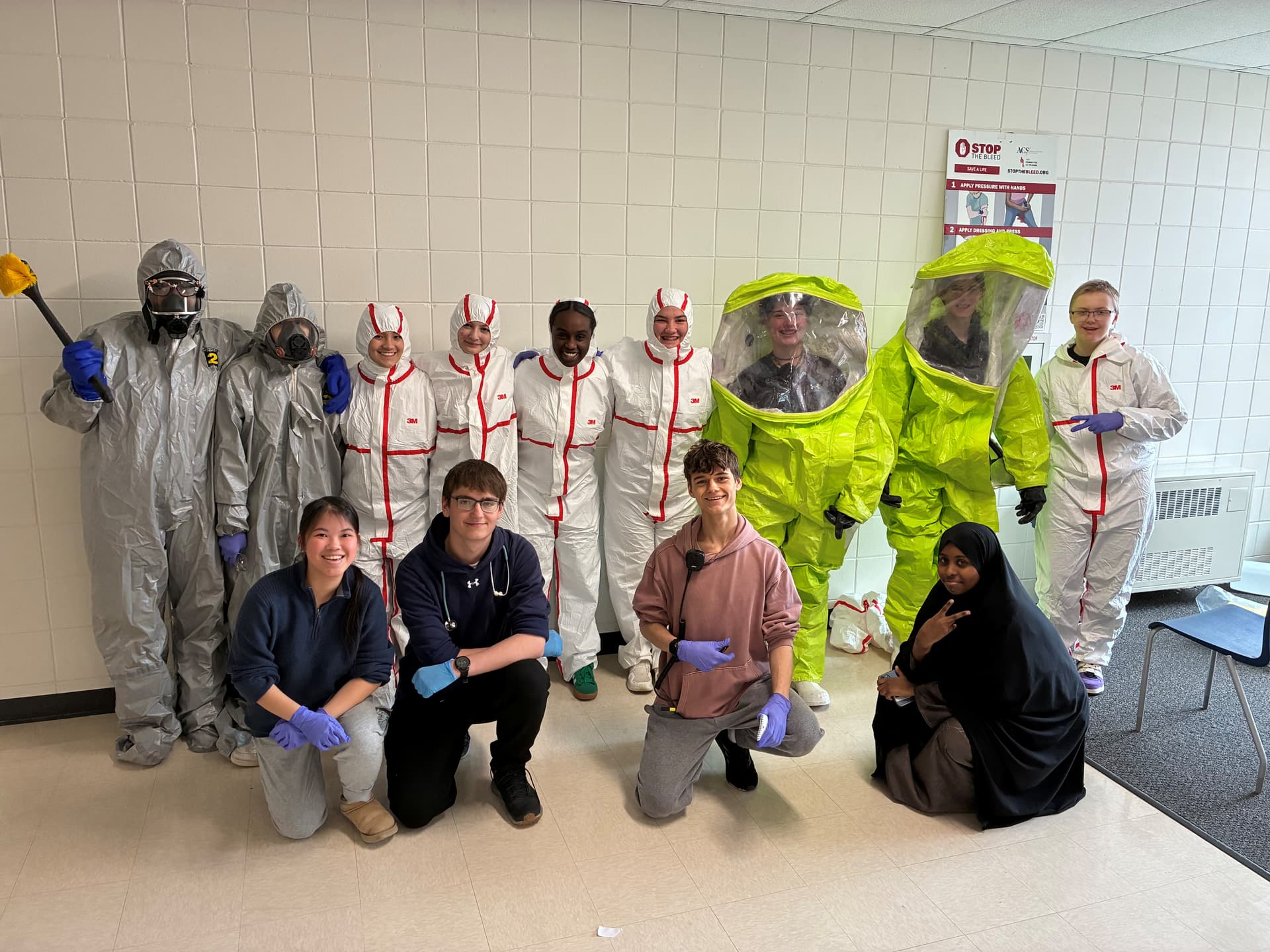
Students run a hazmat drill at Spring Lake Park High School.